Introduction
Before exploring the mechanics of developing control in the male orgasm, in which Tantra plays a part, it makes sense to look at Tantra directly.
Most religious purveyors of enlightenment extol the virtues of a monk’s life. This involves a long, painful, and, for the most part, miserable processes of rejecting every activity that comes ‘naturally’ to a human. Abstinence in all its forms is proclaimed as the only path. Sitting still like a rock, emptying, your mind, and avoiding all pleasures, culinary, sexual, or any other. The terrible secret is that most powerful leaders of religious communities were, and still are, avid secret practitioners of Tantra. Unfairly they hide this from their naive pupils. Endless gurus and priests are involved in inappropriate behavior with young girls or boys as they seek out strong hormonal triggers. The truth is that heightened ecstatic states are readily available to all us, doing what comes naturally, what is very human, but doing it with focus and heightened awareness.
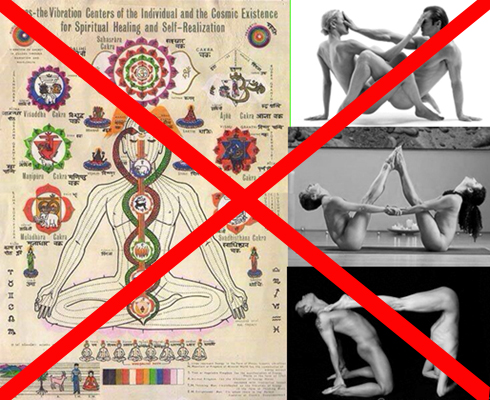
Tantra Yoga today, like the entire movement of Asian mystical practises is frozen in time. Driven by the guru concept, religious overtones, and dogmatic belief, the system maintains instructions unchanged in over two centuries. Exacerbating the problem has been the current western craze for yoga as a lifestyle choice. The corporate branches of these yogic empires have attempted to include elements of tantra in couple’s yoga, and the result is something painfully absurd. It is in urgent need of an upgrade, with our current knowledge of the body. I offer up the traditional breath cycles with a caveat. They are a digression, and can even lead to significant negative physiological consequences, rendering the author unconscious for hours, and in hospital twice. People continue to teach it automatically, without much thought, much in the same way that martial arts continue to teach outdated katas, ensuring their masters are swiftly dispensed with by the modern MMA students.
The Centers
Tantra would benefit from a deeper synchronization with modern biology. The tantric process is primarily expressed in the soluble mediators released, in pulses, by hormone centres around the body, and absorbed by the two participants through ‘gateways’, and gradually ‘stacked’ in every cell of your body. A secondary process is the release and absorption of short-lived signals through the synaptic contacts associated with the neural network. This network not only triggers the hormone centres but can also actually carry nanoparticles themselves, rather than using the vascular system.
We will start by looking at the primary circuits. Hormones are released in pulsatile secretions at different rates, and this may explain the mandala and sound correlations in chakras, even if they are poorly articulated or understood.
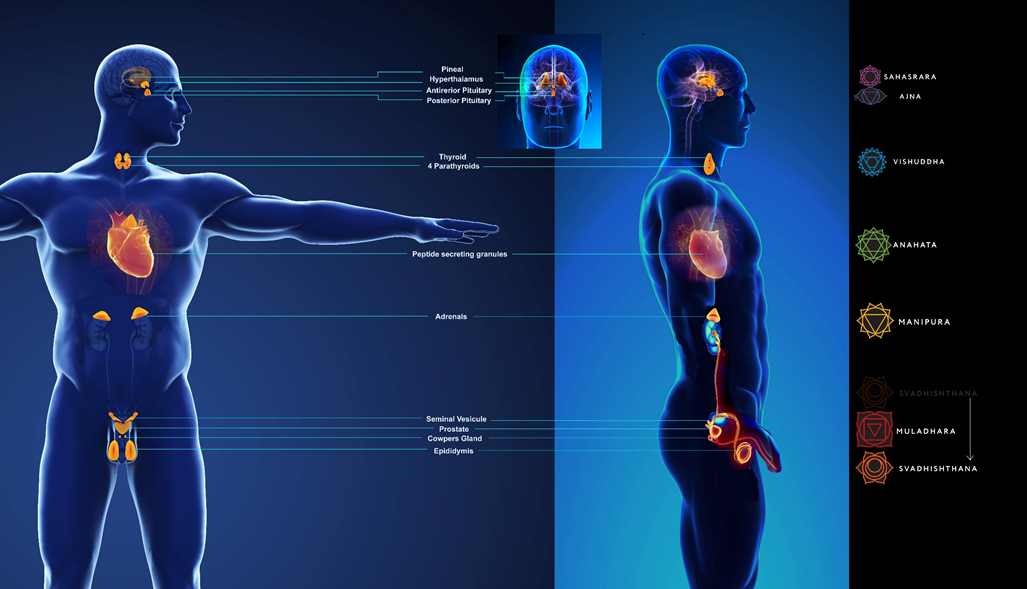
The seven chakras of Yoga are a primitive description of the specific, and generally twin, endocrinal centres: –
- Crown – The Hypothalamus and Pineal glands.
- Third Eye – The Pituitary and Posterior Pituitary glands.
- Throat – The Thyroid and Parathyroid
- Heart – Gland granules within the heart muscles
- Solar Plexus – The two Adrenals
- The Base
- The two Seminal Vesticules
- The Prostate gland
- Two Cowpers gland
- Penile glands
- The Navel or Ovaries for women. For males, the two Epididymis
Other endocrinal glands are not, to my knowledge, directly involved in the Tantra process:-
- The Thymus, that is key to a child’s growth and becomes less active in adulthood.
- The hormones from the Liver’s ALS function and the islets of the Pancreas are triggered by other activities of the body.
The Crown – Sahasrara
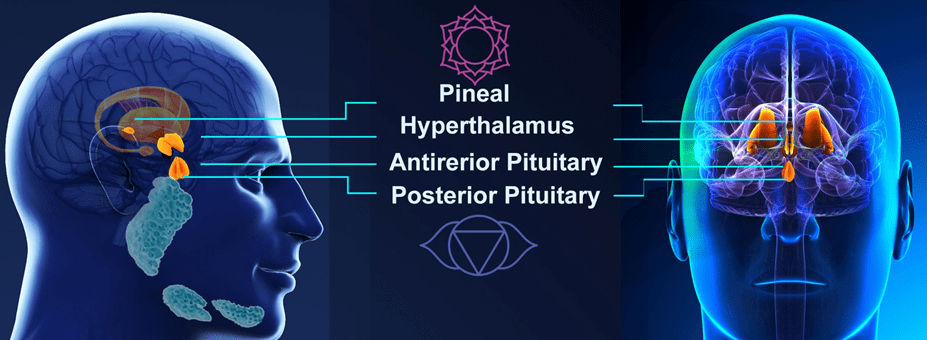
This is essentially the Thalamus and its twin glands. The Thalamus is the hub of the brain, connected directly to the apex of the spinal cortex. It receives data and passes it on to other parts of the brain or body. It is the centre of consciousness, and the associated states of wakefulness, alertness, sleep, and unconsciousness. Note that it does not sit at the top of the head, but 2 cm above the eyes, in the centre of the head.
At the front sits the hypothalamus. Hormonal regulation is controlled within the neurosecretory cells of the hypothalamus. These hormones, as they move down the median eminence, act as inducers or inhibitors in hormone release in the pituitary and posterior pituitary gland. The hypothalamus is the hormonal command centre.
At the back of the Thalamus is the Pineal gland, erroneously called the third eye. Or rather, incorrectly associated with the second chakra. The Pineal and Hypothalamus represent the two arms of the Thalamus, or Crown. Unlike the hypothalamus, it has a profusion of blood supply, second only to the adrenals, and sits outside the blood brain barrier. This blood is, importantly, supplied by the posterior cerebral artery, oxygenated and filled with chemical messages, and returning back up to the brain on its cyclical journey. The pineal gland modulates sleep and alertness, chiefly through melatonin, but also combines with the hypothalamus in coordinating hormone production in the pituitaries. The almost instantaneous sleep after tantra is associated with this gland.
The Third Eye – Ajna
Hormone instructions flow down to the second centre, again a pair of glands, the Pituitary and Posterior Pituitary glands. These glands, acting on the chemical triggers from above, release further activation hormones that grow lower gland centres, the Thyroid, Adrenal, Heart endocrine granules, and Sex glands. The Posterior Pituitary also releases the important ‘love’ hormone oxytocin, which is used extensively in Tantra, and triggered in different ways. The hormones travel past the saliva glands (pictured left), making them available to the tantric partner.
The Throat – Vishuda
This is home to the thyroids. The thyroid has four smaller parathyroids within it. This gland reacts to the signals of the two pituitary glands, in turn, generating hormones that act on nearly every cell in the body. They act to increase and regulate the protein, fat, carbohydrate and vitamin metabolic rates; cell energetic compounds; protein synthesis; bone growth in synergy with growth hormone; neural maturation; and increase the body’s sensitivity to dopamine and adrenaline. The thyroid hormones are essential to the development and differentiation of all cells of the human body.
The Heart – Anahata
In the heart region we are only taught about the heart’s function as a giant pump for the blood system. In Tantra we are interested in this organ’s important role as an endocrinal gland, only discovered in 1984 and still in its infancy. Two extremely important vasodilating hormones are released from granules in the upper chambers of the heart, A- and B-type natriuretic peptides. These compliment the production of Renins on the outer wall of the kidneys. While science understands the working of these hormones in constricting and dilating veins, and accelerating urine production, the effects on mood have not been studied.
The Solar Plexus – Manipura
Hormones from the Pituitaries also go directly to the Adrenal glands, that sit like caps on top of the kidneys. Per gram, these glands have the greatest blood supply in the body. All hormones are released directly into the blood supply, with as many as 60 arteries entering each gland to distribute the hormones throughout the body. Androgens are also produced and move down to the testes for conversion to testosterone. Adrenaline, and the steroids aldosterone and cortisol are the main hormone groups produced.
Navel – Swadhistana
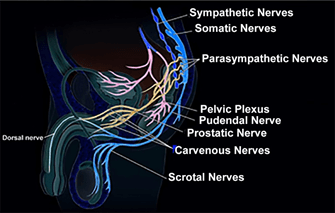
In a woman this would be the ovaries. In a man the ovaries are essentially the testes which, from pubescence, sit outside the body. As you can see from the diagram above, the tubes have dropped down the front of the bladder to take on their new external position. The Epididymis located in the testis produce the important hormone testosterone.
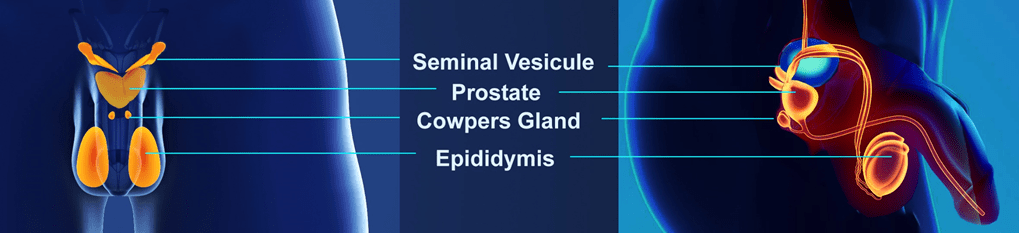
This is the area associated with four glands essential to Tantra, the Seminal vesicle, Prostate and Cowper’s gland, as well as the Penis gland. While the Penis glands are not endocrinal, they are highly absorbent, and are able to transfer large quantities of hormone rich vaginal fluids and saliva back to the prostate.
They’re extensive neural network also feeds back to the other centres in the body, chiefly through the dorsal nerve, to the pudendal nerve, on to the spine, then all the way up to the Thalamus, or Crown. At the pudendal canal signals can also be past to the three sex glands. Massage of the scrotum likewise feeds into the same channel. But the most meaningful discovery has been that stimulation of the penis gland and erections activates the thalamus part of the brain, confirming the tantric loop. Also, the reverse is true, deep tissue stimulation of the thalamus likewise results in erections. Stimulation of the pelvic plexus and the cavernous nerves also induce erections.
In the same way as the thalamus is the hub of the brain, the prostate acts as the hub of the sex organs. It manages blood flow and hormones coming in from the dorsal vein of the penis carrying hormones absorbed by the penis from the partners saliva or vaginal fluids. It also feeds back hormones into the vertebral venous plexus which connects to the spine as the hormones journey back up. The Cowper Gland and Seminal vesicle also contribute additional fluids. This cocktail is not clearly understood by modern medicine. The secret of Tantra is largely that these fluids can be gradually ejaculated, without sperm, during Tantra, passing hormones to your partner. In this way, a strong two-way transfer occurs between the partners.
Stimulation and dissemination of the hormones produced in these three sites, and collected by the saliva and penile glands, are key to triggering the extended euphoric states in Tantra. These three glands can also be manipulated directly with anal massage.
A prostate orgasm can be achieved separate from a penile orgasm, also without any reduction in erection, or arousal.
THE PATHWAYS
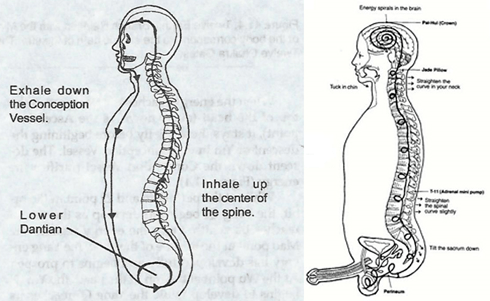
The Small Cycle is the main pathway, and visualization technique, of tantric yoga. Traditional texts suggest using a combination of breath and visualization to push the Energy around this circuit. The Large Cycle is much the same but includes the arms and legs. With each breath the focus slowly shifts to the next hoop, there being hoops also at the frontal path. So, on the way down, you visualize the movement to the next centre on the out-breath, and then, on the in-breath you perform a small circle around the centre. The same occurs on the way back up the spine, but with the movement up occurring on the in-breath. There are three breath cycles as you circulate the Qi around the skull, before heading back down the front again. As the channel is narrow through the palette, and you want time for the saliva to absorb the hormones, some texts suggest two cycles here also. The visualization exercise should always end at the abdomen with three horizontal circulations.
But this should be all be reconsidered within the context of the actual physiological processes. Hormones head out on the vascular network from the Throat, Heart, and Adrenals. It helps to visualize this dispersion, and these should be the starting points of the Large Cycles out towards the organs and limbs, rather than from the base. The glands are generally a twin structure, laterally or in depth, with two parallel pathways. There is significant interaction with the bone marrow that needs to be incorporated into the process. This reformation of the pathways must be explored carefully by the student visualizing modern diagrams for these pathways (see diagrams on next page).
Imagine a network of streams gradually filling up with water. It takes a while for the most distant cells to be reached, and enough pressure to build, and clear, any unhealthy blockages. This is why Tantra tends to be practised over hours rather than the minutes which atypical males associate with sex. Females do intuit this broader process, requesting a romantic evening dinner high in sugars and protein, music, dance, titillating conversation, and extended foreplay. Without any training they understand the mechanics and benefits of Tantra. A man goes into a brothel and books a few minutes that do little more than empty his sack!
So, the art of tantra is to stimulate all the hormone centres, collect hormones from your partner, and begin circulating them around the body to every cell. I call this stacking. All three networks are involved, the vascular, lymph, and neural. Firstly, the hormones need to be triggered in the Crown glands, then primary hormones released from the Pituitaries for further development in the secondary glands, ready for distribution. These then need to be blended with hormones from your partner, and a feedback loop maintained between the Sex glands and the Thalamus. Building enough production to service the entire body can take several hours. During this time sperm production must be kept to a minimum and not ejaculated. The erection needs to be maintained also for this long period. This is the reason why male Tantric practitioners need to develop muscles and awareness with the Pee Pause, Hot Rocks and Double Dry Lock exercises. Once control has been established, other tantric practises with the partner make it easy to maintain and accelerate the hormone production and distribution. Food breaks every 90 minutes also are helpful.
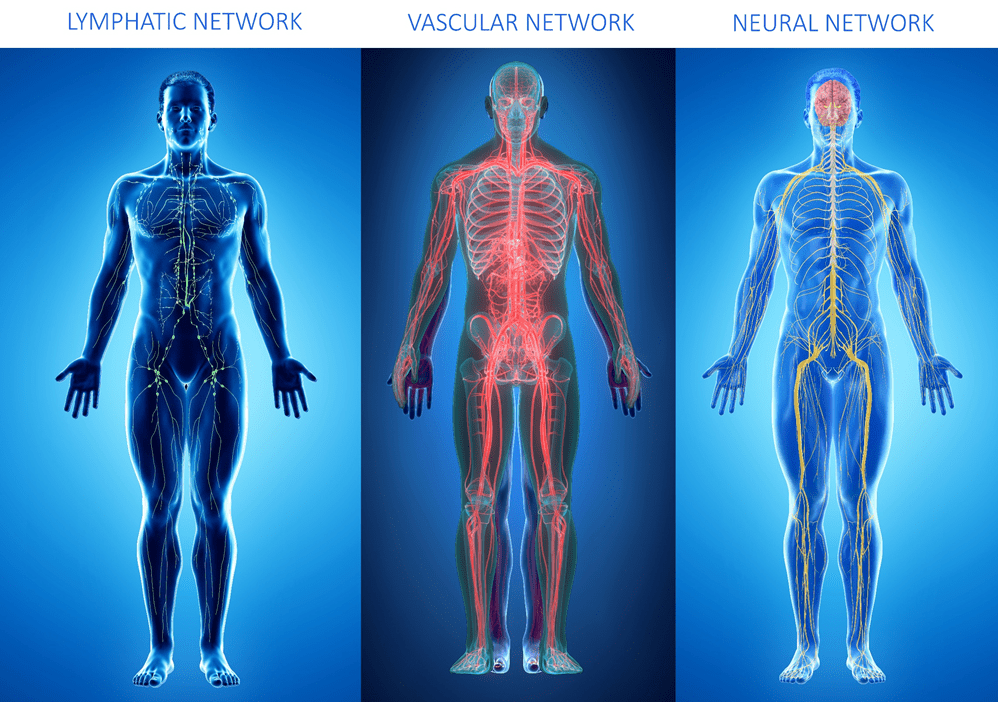
The vascular diagram only shows the arteries and arterioles. Then there is the process of delivering these hormones to the cells themselves. Blood vessels branch and get increasingly small as they extend from the heart to the peripheral circulation. The diameter of the inside portion of the aorta in the chest is a massive 30mm; Iliac arteries are about 15mm; the dorsalis pedis intraluminal is about 1mm; the capillaries are 0.005mm, smaller than the diameters of individual red blood cells. Not all cells sit at the end of a capillary. In tissues with high oxygen demand, like skeletal muscle, there are many capillaries. In tissues with a lower oxygen demand, capillaries are less dense. Blood pressure, even physical pressure, and most importantly diffusion help the hormones travel the final section through interstitial fluid in the tissue. In the tissue, metabolic waste is at a higher concentration, so it diffuses towards the blood supply and lymphatic system. By contrast, in the blood and lymph systems, oxygen, hormones, and other nutrients are in higher concentrations, so they diffuse towards the tissue. So, not only blood pressure, but also the concentration gradient of solutes, drive the movement of hormones to the cells. The Lipid-soluble hormones finally diffuse through the plasma membrane to enter the target cell and bind to a receptor protein, while water-soluble hormones bind to a receptor protein on the plasma membrane of the cell.
This process also takes a considerable time. Within each cell there are further processes. Study is in its infancy of the crystal structures within the networks of microtubules. We are only just beginning to have the tools to view activity on the molecular scale sub 5nm. Where once we envisaged a cell, much like a sack filled with water housing the nucleus and mitochondria, studies at the nano scale are revealing microfilaments barely as wide as a molecule, with complex electrical signals rotating molecules; initiating construction and collapse of protein fabricated tubes; as well as the better understood processes of CO2 and O2 exchange. Some early research suggests a possible 6 phase quantum positioning of water molecules in the smallest filaments which would open-up extraordinary possibilities of a cell having memory capabilities.
Encouraging the Hormones to flow and build correctly, delivering the maximum amount to the most cells is the mechanical art of tantra. Tantra can also be used to focus on areas of the body in need of healing.
THE GATEWAYS
Hormones and neural signals can enter the Pathway in several different ways. These are the Gateways through which the tantric partners can exchange hormones and signals, heightening, by an order of magnitude, the experience.
- Eye contact
Medical research has confirmed that prolonged eye contact triggers Oxytocin in the hypothalamus, which is released by the posterior pituitary. Tantric practitioners will maintain eye contact for periods of two minutes at a time. The eyes are meant to feel heavy, drunk, and it is gentle looking, rather than starring.
- The Breath, shortcuts to ecstasy
When you exhale, it is not simply a blend of nitrogen, carbon dioxide, and water. There is a profusion of hormones and chemical signals also present.
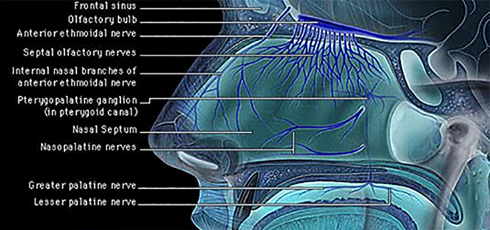
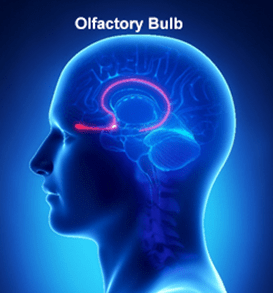
The neural network can also transport nanoparticles over short distances, and the Olfactory nerve system transfers hormones directly to the Thalamus, bypassing the blood brain barrier.
In Tantra the couple will have their noses close to each other, and subtly inhale the other’s exhalation, compressing the pharynx with the tongue, and inhaling slowly. This allows time for the Septal olfactory nerves to collect the hormones directly to the Olfactory Bulb that resides within the brain itself, wrapped around the Thalamus. This is a powerful hit and an important element in the Tantric practise.
The breath also, more obviously, is used to oxygenate the blood, which accelerates hormone diffusion, with the lungs providing a pump action as they expand and contract.
- Lip contact
Lips and tongue have the highest density of nerve endings for any external organ, after the penis head. They are also highly absorbent, hence the need for lip balms. Not surprising therefore that kissing is an essential part of Tantra, mouth to mouth, oral sex, or simply through the skin. The lips and tongue are the third gateway of tantric yoga.
- Ears
The ears are receptors in the subtler sense of singing, a good baritone voice, music, rhythm, compliments, jokes, or dirty talk. Dancing and singing are integral parts of traditional Tantric practise. The effectiveness can be seen in the reaction of young women to romantic bards. If Barry Manilow can make a woman have a spontaneous orgasm at distance, at a concert, there is hope for all of us!
- Hand contact and touch
Traditional Tantric postures have participant placing their palms against their partners palms for extended periods, while looking into each other’s eyes, and cycling your breaths. This can feel a bit awkward and so simply holding hands at irregular times can be more effective. Massaging the partner can also be a great way to make hand contact.
Touch tends to track the hormonal pathways, lingering on the centres, whether it is in its subtlest form, by simply focusing your attention on an area, soft strokes, or firmer massage. This focuses the mind on the flow, stimulating production of hormones, even encouraging blood flow.
- Penis
The urethra releases, in cycles, sexual fluids loaded with hormones. These can be absorbed by the walls of the vagina, the lips of the mouth, the highly absorbent mucosal tissues in the oral cavity, the tongue, and palatine nerves. The Penis glands are also excellent absorbers of female sexual or saliva fluids, as discussed earlier.
- Testes
The underside of the testis are thick with nerve endings and a vascular system with direct access to the key neural causeways. Massage acts on the vascular system and gentle touch stimulates the scrotal nerves which are directly linked to the Somatic Nerve that travels up the spine.
- Anus and Perineum
Although the anal canal has very few nerve endings, it touches the prostate, Cowper glands, and Seminal Vesicule. This allows direct stimulation of these important sexual glands, increasing the production of sexual fluids and triggering signals that accelerate production in the higher glands.
- Bandas
There are also what the Indians call Bandas. This is where you can briefly block a region, allowing the Energy to pile up behind the blockage and then flood the area on release. This is used sometimes in controlled strangulation, sustained pressure on the pelvic bone, biting, or slapping. This is particularly effective for clearing blockages. The traditional bandas are for solitary practice, so generally places that can be temporarily blocked by bending a joint or clenching a muscle. The most famous being placing the chin against the thyroid or clenching the muscles around the perineum. But, with a partner, there are many more bandas open to exploration.
VISUALIZING
Now we have a basic physiological understanding of the locations of the Centres, the Pathways, and Gateways where your partner’s hormones can enter, it is easier to ‘see’ the process as more than the simple Small Circle of Tantra. You have the clear line between the hypothalamus and pituitaries, and then the paths down to the first gateway ‘the eyes’, the second gateway the nose, to the three saliva glands where they can be made available to your partner, at the third gateway, your lips and mouth. Hormones from your partner are added at each stage. The mixture then moves to the thyroids in the throat. Hormones flowing in the blood, that successfully meet a receptor then trigger the longer string hormones generated by the thyroids. These begin to be distributed out all over the body, beginning their long journeys out to the peripheries. The same happens at the heart glands and adrenals. Hormones that failed to meet their receptors will carry on around, completing a loop, and hopefully bumping into a receptor next time around. Other hormones move on down to the testes to generate the important testosterone for distribution through the body. Finally, the hormones mix with lubricants and hormones in the sex glands, either to be passed to your partner, or sent back up to wash over the pineal gland at the back of the Thalamus. Visualizing this process helps, and gradually you will become sensitized to feeling its ecstatic progress.
Dancing with the Goddess
Before attempting any of this it is important to revisit the essential element of your attitude. The attitude makes an enormous difference in stirring and directing what the Chinese call Qi, the Indians Shakti, and what Europeans can best describe as hormones, neural light, blood flow, or organ heat.
European psychology has a derogatory term for the Tantric state, they call it the Infatuation Phase. This is described as the first six months of a relationship. In ashrams the ecstasies of the new devotee follow a similar path. Western science and psychiatry view the experience of new lovers and cult devotion as the release of massive doses of oxytocin, PEA, dopamine, and norepinephrine, causing the sensation of euphoric love which becomes associated with the other person or a guru. Likewise, they have measured a link between strong sexual libidos and high testosterone levels. The fleeting nature of this experience is due to a lack of mental discipline in the couple, and the name ‘infatuation’ dismisses something profound and worthy of our attention.
While some segments of the psychiatric community recognise love as the key component to long term relationships, they debase the early stage ecstasy of romantic love in simply chemical and biological terms. On one level they are correct.
Eastern mysticism says that the vibrations of life begin in our shared soul. Love is the name we have given to the fabric of our soul. It is the pure pulse before the turbulence that creates the complex patterns of our universe and lives. These vibrations emanate out into our causal, emotional, and mental bodies and lastly to our physical bodies. Mystics would say that love, is not the effect, it is the cause of the production of the hormone cocktail on the physical plane, and that a high libido causes, or perhaps more accurately, is articulated on the physical and chemical plain with higher testosterone being generated. Whether the mystics are correct about the fabric of our universe is open to debate, but the effects of this attitude can be confirmed by experience.
Infatuation IS the Tantric state; the state of drunken mystic poets; young star-crossed lovers; and is invoked when we see our lover for whom she truly is. We consciously observe someone as a super-being, briefly playing the role of a limited human. She is beautiful beyond description and we drink her in like nectar. We worship her. This is how most relationships begin, but sadly, never continue. In most relationships, people get quickly distracted, and begin to see their lover not as a demi-goddess anymore, but someone ordinary, with numerous imperfections. All that has changed is their attitude, and with it, goes the hormonal hit, the infatuation. With care, however, this attitude towards one’s partner can be sustained for decades. It can be actively cultivated. Watching their movements and seeing grace, continually focusing your thoughts on their beauty, external and internal. Both partners need to actively cultivate it, then it is reasonably easy to maintain, in the same manner that you sustain a fire.
It is critical for Tantric practitioners to maintain this awareness all the time. Some practitioners do Tantra with someone other than their life partner, or even a professional, but the same point applies, if not more so. This attitude is the key to the Tantric experience.
This basic introduction to Tantra has looked at the Centres, Pathways, and Gateways in the context of modern physiology. While it is extremely helpful to use scientific methodology, this should not undermine the extraordinary nature of what is occurring. In the same way as a physicist can describe the birth of a star in thermal and nuclear language, this should not distract from the magnitude of what is occurring. The chemistry is simply a manifestation of what is occurring on more profound levels, it is most certainly not the experience itself.
CONCLUSION
This is simply an introduction to the body from a Tantric perspective. This is not a discussion of techniques used to magnify the State of Tantra, or how to be an excellent partner. It also does not explore the meaning of Tantra or Yoga.
But the experience of Shaktipat, or spiritual awakening, that initiates the Yogic journey is a pale cousin of the Tantric experience. A Tantric practitioner can re-enter states of profound bliss whenever he or she chooses. The brief and decreasing euphoria experienced in other yoga traditions are hard to duplicate, weaker, and offered by the guru in return for unwitting devotion. In this sense, Tantra sets the spiritual practitioner free, and allows him to find his own path. With this in mind, I will not seek to lay out the signposts of my own journey, nor that described by others in famous yogic texts. Enjoy.
 wildfry